

IrriDesign – Irrigation Demand Sizing Calculator
🌱 • 🚀 Agronomic precision
🎯 What is this calculator for?
It allows you to estimate water requirements and irrigation design values for your crop or garden, based on the scientific FAO-56 methodology and historical climate data (NASA POWER).
✓ FAO-56 methodology • ✓ Climate series > 20 years • ✓ Results in liters/day
You will obtain daily water consumption, design values and a consistent technical basis for irrigation system sizing, both for gardens and agricultural operations.
⬇️ Enter your plot data to start the calculation
☀️ ETo — Water required by the climate
FAO-56 Reference Evapotranspiration (ETo) Calculator
FAO-56 Reference Evapotranspiration (ETo) calculator, based on historical NASA POWER data. This value represents the reference climatic demand used to size the irrigation system under demanding conditions.
🌱 ETc — Water that plants need
FAO-56 Crop Water Demand Calculator (ETc)
Average ET reference: 10.85 mm/day
- Conservative design criteria
- Technically valid basis for reports and projects
Added sectors:
📊 Results and Integrated Water Savings
Resultados medios (condiciones normales)
Demanda máxima de diseño (mes más exigente)
🧮 Technical Calculation Report
When the calculation goes beyond being merely indicative and it becomes necessary to document the criteria used, this option allows the results to be converted into a technical document in PDF format.
-
📄 PDF Report
Downloadable document containing the entered parameters, calculation criteria, and main technical results.
Generated using a CAG (Context-Augmented Generation) approach, in which results are produced from structured data and explicit technical criteria. -
🔄 Unlimited Sectors
Allows working on complete projects, with no restrictions on the number of sectors. -
🚀 Professional Access – 1 Month
Up to 5 technical reports per day for 30 days. Ideal for a complete project or multiple professional assignments.
This report does not replace an executive project, but provides a documented, consistent, and traceable technical basis to support design decisions, evaluation, and comparison of alternatives.
COMING SOON
In a pressurized irrigation system, the electricity bill is mainly determined
by two concepts:
contracted power and
energy consumed during pumping.
Ct =
Power
Hydraulic power
Oversizing leads to a permanent energy cost increase.
Efficiency is defined in the hydraulic design.
The three key levers are: pressure (H), flow rate (Q), and applied volume (V).
In summary:
a rigorous calculation of ET₀ and ETc
allows proper sizing of the irrigation system
and avoids unnecessary energy costs.

💡 Why is this calculation the basis of water–energy strategies in irrigation?
(read more)
P = γ · Q · H / η
Depends on flow rate (Q)
and pressure head (H)
× power price
+
Energy
Pumping energy
E = γ · V · H / η
Depends on total volume (V)
and pressure head (H)
× energy price
Detect sectors requiring higher pressure head
and optimize layout, pipe diameters, and zoning.
Reducing H linearly decreases installed power and energy consumed
over the system’s lifetime.
Allows operation with lower pressures and flow rates,
increasing hydraulic efficiency compared to sprinklers.
Limiting simultaneous flow reduces required power
and prevents oversizing pumping groups.
Applying water where the crop actually benefits
reduces total pumped volume and energy consumption.
Adjusting doses to the crop’s real needs
prevents structurally oversized irrigation.
ℹ️ Technical scope of the tool (read more)
- daily crop water demands (ETc),
- irrigation volumes and depths,
- irrigation intervals compatible with soil retention capacity,
- and design values with low risk of water deficit.
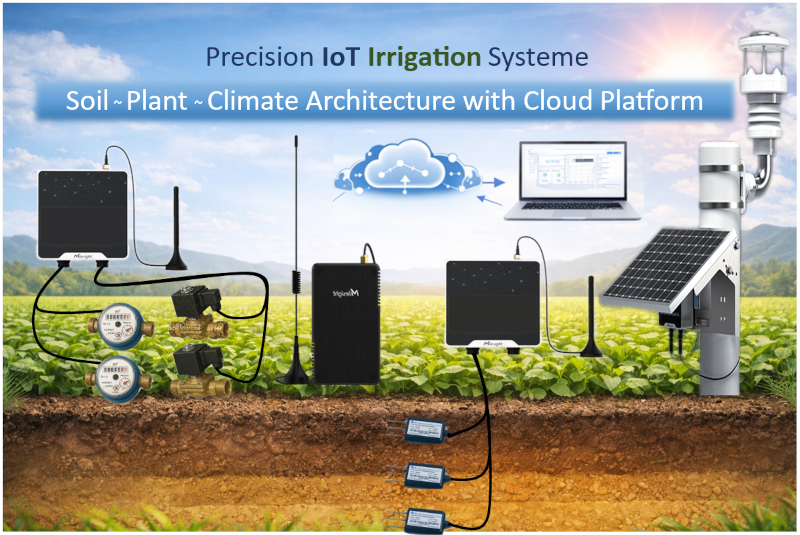
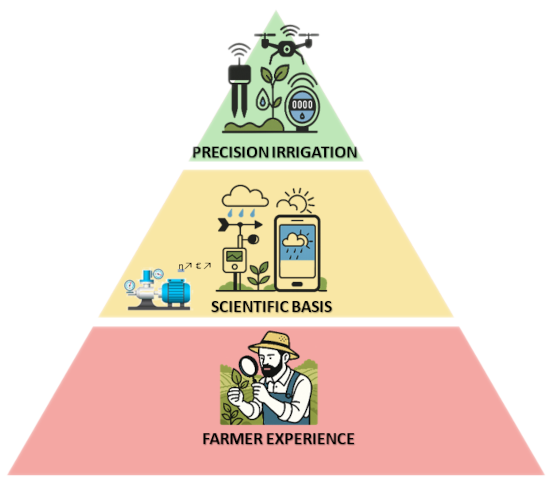 Real-time irrigation operational scheduling, advanced automation,
or the implementation of digital irrigation twins correspond to
a later phase, where soil, plant, and climate sensors,
real-time data, and specific management criteria are integrated.
Real-time irrigation operational scheduling, advanced automation,
or the implementation of digital irrigation twins correspond to
a later phase, where soil, plant, and climate sensors,
real-time data, and specific management criteria are integrated.
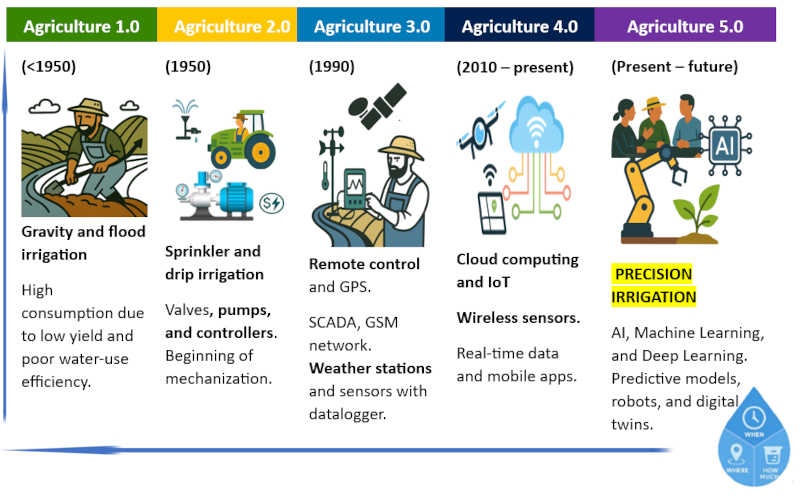 These advanced phases require a personalized approach and are part of
specific professional services, developed according to the crop,
existing infrastructure, and production objectives.
These advanced phases require a personalized approach and are part of
specific professional services, developed according to the crop,
existing infrastructure, and production objectives.

💧 Professional Reuse Services
From analysis to real implementation
Audits, design and installation of complete systems
✅ Regulatory compliance • ✅ Tanks and filters • ✅ Technical guarantee