

Water Systems for Communities and Urban Hotels
We close the water cycle with intelligence and simplicity
« We design smart systems that make obtaining environmental certifications (LEED, BREEAM, WELL) easier, helping you reduce water and energy consumption without compromising reliability or ease of maintenance. »
The most common problems:
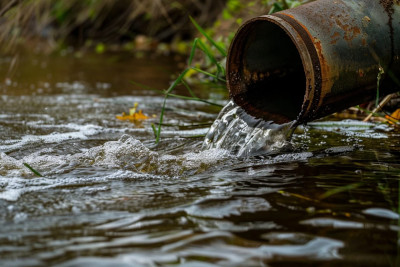
- Treated water overflows and mixes with wastewater.
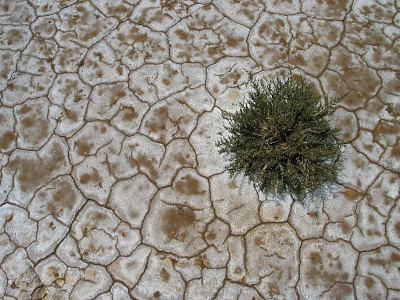
- Gardens become oversaturated due to salt accumulation and uncontrolled chlorination.
- After six months, the system stops working due to poor practices and only functions with potable water.
- The volume of treated water is not monitored.
- Staff in charge lack the necessary technical training.
The solution: Smart Automation
Cloud, LoRaWAN, Membranes, UV, Sensors…
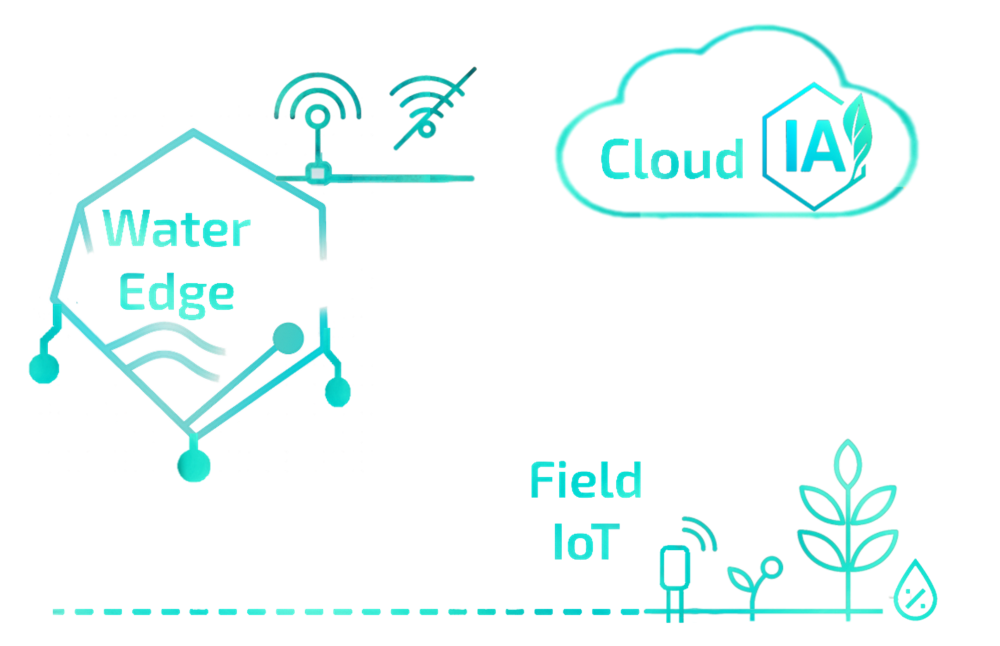
We provide modular systems that use IoT and artificial intelligence to manage and reuse water through simple, automated processes.
Our solutions collect and treat domestic water for safe reuse in non-potable applications such as garden irrigation or pool filling. With advanced sensors and LoRaWAN connectivity, your system is monitored in real time. AI then optimizes performance based on local conditions, usage patterns, and technical limitations.
Key Benefits:
💧 Optimization and Reuse of Greywater.
✔ Compliance with current and future regulations.
⚡ Predictive maintenance and real-time alerts.
🌱 Enhancement of the building’s environmental image.
How does it work?
1- Free preliminary study to define the ideal system.
2- Technical installation with smart sensors and certified materials.
3- Automated treatment: collection, filtration, disinfection, and reuse.
4- IoT monitoring: control water quality, pressure, and pH from the app.
5- Support and maintenance with automatic alerts.
6- Guidance on local and European subsidies.
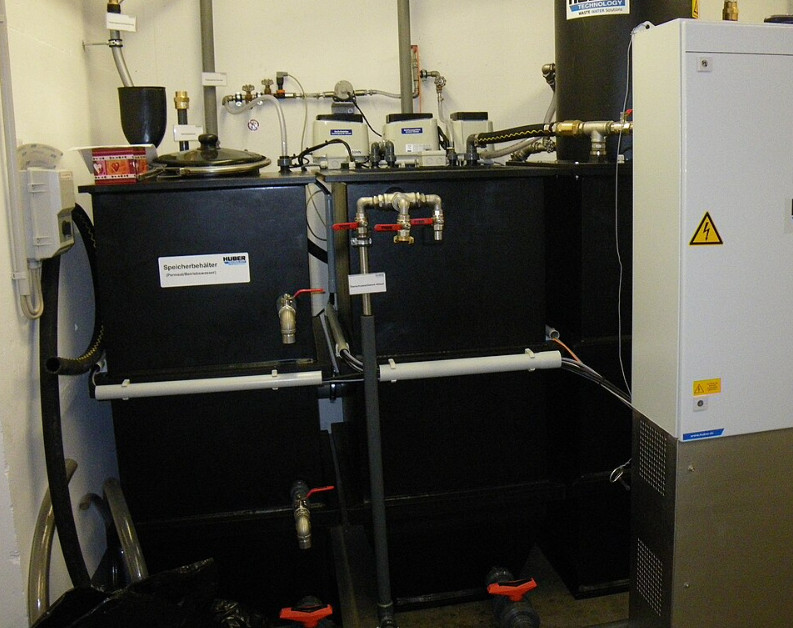
We integrate proven market technologies and turn them into smart, ready-to-use systems. Our goal: save you water and energy with a reliable and easy-to-maintain solution.
Which membrane system fits your project best?
| Membrane Systems Comparison | Submerged Flat Plate Membranes (Microfiltration, Flat Plate type) 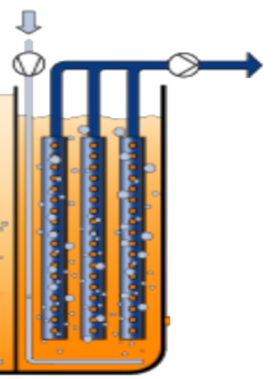 | Ultrafiltration Cartridges (Hollow Fiber) 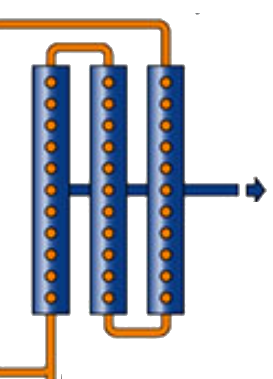 |
Expand table
| 🌱 Type of Treatment | Biological + Filtration (high organic load) | Physical Filtration (requires pre-filtration) |
| 👥Recommended Capacity | 4 to 80 people | 40 to 150 people |
| ⚙️ Components | Membrane cassette, blowers, permeate pump | UF cartridges, automatic valves, PLC, backwash system |
| 🛠️ Maintenance | Semi-automatic (circuit cleaning and manual cassette cleaning) | Automatic with chemical cleaning (no disassembly required, technician needed) |
| 🤖 Automation | Optional (PLC, level control) | Mandatory (pressure, flow, turbidity, and chlorine sensors) |
| 📐 Space Required | Requires top access and deep tank | Modular, takes less height; electrical panel requires ventilation |
| 💧 Effluent Quality | High: removes bacteria (pale yellow water). Risk if a membrane fails. | Very high: retains viruses (almost colorless water). Requires active monitoring; risk if a membrane fails. |
Frequently Asked Questions
Can pool filters (sand or glass) be used to treat greywater?
These filters remove large particles (such as sediment or coarse organic matter).
However:
- They do not retain bacteria or viruses.
- By themselves, they do not provide a microbiological barrier.
To achieve the required water quality, the following is necessary:
- Effective chlorination for continuous disinfection.
- Simply “adding chlorine” is not enough.
- Concentration, contact time, and stable residual must be controlled.
- Undesirable by-products must be avoided.
- Ultraviolet (UV) light as occasional reinforcement.
- Provides no residual protection.
- Does not replace chlorine as the main barrier.
What does regulation RD 1084/2024 indicate?
The regulation addresses water quality for reuse applications.
It recommends that water intended for flushing sanitary devices meets the highest quality criteria.
These recommendations do not directly apply to treated greywater in private settings, although they are often used as a reference guide. Not as a mandatory requirement.
It specifies that when there is a risk of aerosolization (for example, open cisterns), it is suggested to measure viruses, such as bacteriophages, which are much more resistant to chlorine than bacteria.
In systems with flint filtration and chlorination, applying this recommendation may exceed the capacity of these barriers.
Is it enough to just recommend lowering the lid when flushing?
- It is a good practice to reduce aerosols
- But it does not replace proper treatment or sanitary control.
Can non-microfiltered greywater be used in toilets?
- Yes, but only under regulated conditions (according to local regulations)
- The responsibility lies with the owner or designated manager, who must ensure sanitary compliance.
- The maintenance company provides technical support only and does not assume legal responsibility.
What is essential to ensure safety?
A complete system must include:
- Filtration: membranes (micro/ultrafiltration) or, as pretreatment, flint (sand/glass).
- Continuous disinfection: chlorination as the main barrier, and UV as reinforcement.
- Real-time monitoring: control of flow, turbidity, and disinfectant residual.
- Risk management plan: maintenance, alerts, and regulatory compliance.
Without these layers of protection, safe use cannot be guaranteed, even if it complies “on paper” with the regulations.
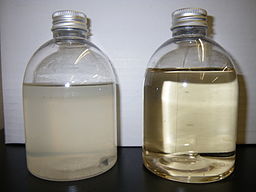
Left jar: untreated greywater
Right jar: membrane-treated water, no visible residues
The light brown color comes from natural humic acids
Photo: SuSanA Secretariat Flickr, CC BY 2.0
Whether you face water pressure issues, overwatering, or simply seek smarter, cleaner solutions, our technologies adapt to your needs with minimal maintenance.
Additionally, if you want to know how much water you can save, we provide a calculator designed according to EN 16941-1 and EN 16941-2 standards to help you size your system accurately.
Beyond static “plug and play” greywater systems, we offer configurable solutions on a larger scale. Our expertise includes nature-inspired technologies like phytoremediation, creating living and aesthetically beautiful ecosystems, as well as advanced systems such as membrane bioreactors, ideal for more complex needs.
We adapt to your needs.
Let’s Talk:
We’d love to understand your situation to design the best water solution for you. Share your project details below — no obligation, just to get a better understanding.
Are you interested in a system for a villa, rural hotel, park, or golf course?
Visit our dedicated page.
💧 Professional Reuse Services
From Analysis to Real Implementation
Audits, design, and installation of complete systems
✅ Regulatory Compliance • ✅ Tanks and Filters • ✅ Technical Guarantee